G, R and S: Three Space-Weather Scales That Should Not Be Mixed
A space-weather dashboard can display several numbered alerts at once. The letters matter as much as the numbers: NOAA separates geomagnetic storms, solar radiation storms and radio blackouts. Reading the correct scale prevents a dramatic headline about one phenomenon from becoming an unsupported northern-lights prediction.
Original explanatory diagram. Read the full method and limitations below.
Read the letter before the severity number
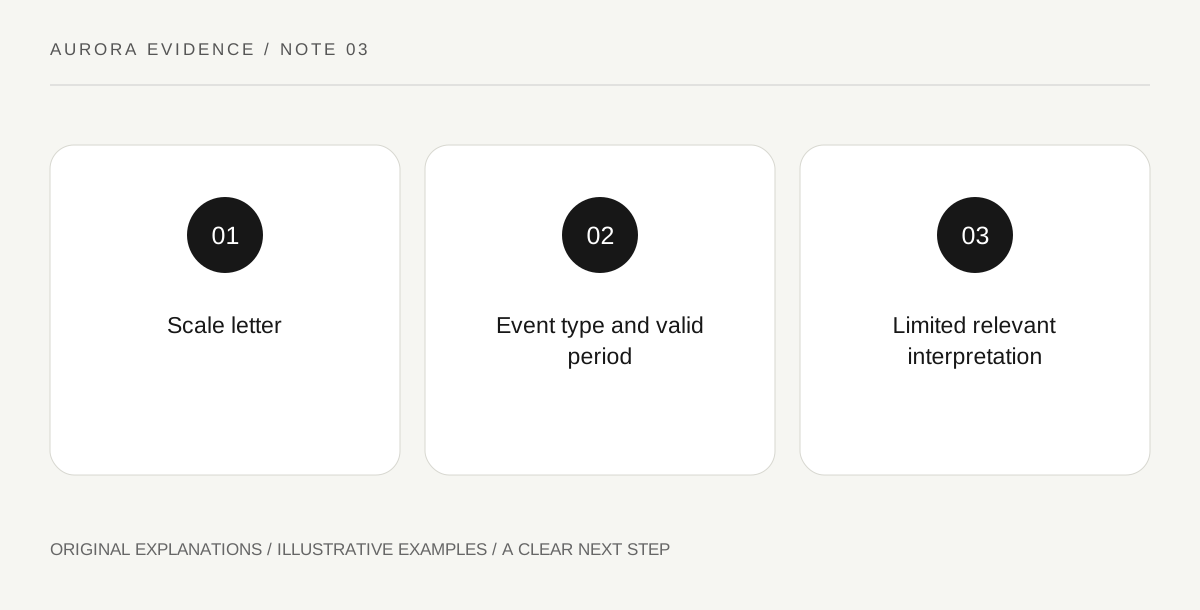
NOAA’s scale explanation organizes three types of disturbance into separate numbered systems. G refers to geomagnetic storms, S to solar radiation storms and R to radio blackouts. Start by copying the letter together with the number whenever you record an alert. Writing only level three removes the type of event and makes later interpretation ambiguous. The categories describe different environmental disturbances and potential effects; they are not three interchangeable ways to rank the same aurora. A dashboard can place them near one another for convenience while still requiring the reader to preserve their separate meanings.
Connect the aurora question with the relevant context
Geomagnetic conditions are directly relevant to auroral context, but even the G scale is not defined as a guarantee of light over one visitor’s location. Read the provider’s description rather than translating an alert number into a tour promise. A solar-radiation or radio-blackout headline may be important for other users without identifying a visible local display that night. Do not assume that because all three arise within space-weather reporting, the largest displayed number must describe the strongest aurora. Keeping category and effect together makes the information useful instead of simply dramatic.
Distinguish an alert’s status from its category
After identifying the letter, read whether the notice concerns current conditions, an observed past maximum or an expected future period. A dashboard’s recent maximum can remain prominent after the relevant moment has passed. Keep the issue time and valid period with the scale label. If a news headline quotes a number without the letter or status, return to the primary notice before drawing a travel conclusion. This is especially useful when screenshots circulate across time zones. A correct category still becomes misleading if its time context has been removed or silently shifted to another night.
Use a three-column exercise to test understanding
Make an original table with columns for scale, event type and what question it answers. Place fictional dashboard labels in the first column and paraphrase the provider’s definitions in the second. In the third, write a limited interpretation rather than a personal outcome. For example, a geomagnetic label supplies storm context, while local cloud and optical observation remain unaddressed. Avoid listing speculative infrastructure failures or treating possible effects as a forecast for your trip. The exercise succeeds when a reader can explain why two identical numbers with different letters cannot be compared as though they were a single light-intensity score. Keep the original notice beside your summary so a reader can inspect the category, severity and timing without relying on your shorthand.
Illustrative headline check
A traveler sees a shared message saying level three tonight. Before acting, the traveler finds the primary notice and discovers which letter, time period and status it actually uses. The note preserves those fields and does not infer a guaranteed aurora. The example intentionally supplies no real alert value or current space-weather assessment.
Practical checks
Optional checkboxes save only in this browser.
Questions that come up
Does R3 mean the same auroral activity as G3?
No. The letters identify different NOAA event scales. A shared number does not make the categories interchangeable.
Is a G-scale alert a sighting guarantee?
No. It supplies geomagnetic-storm context. A local visible display still depends on the actual optical phenomenon and observing conditions.
References and scope
These sources support the factual background. Examples and exercises are original illustrative teaching material. References do not imply endorsement.
- NOAA: space-weather scales — Separate geomagnetic, solar-radiation and radio-blackout scales.